Language

Pulished on Jun. 29, 2026
Machine-blown glass production is a modern, automated mass manufacturing technique widely used for daily glassware. It delivers highly consistent product specifications, stable quality and outstanding production efficiency, and has become the important production method for ordinary household glass products. Though now machine pressed method hold the dominant position in the daily glassware production industry, the machine-blown method is a important addendum because some shape and designs only blown techniqe can work, and also the apprearance of blown glass and pressed glass is difference. Blown glass will be more thin and elegant, while pressed glass are much more thick in glass wall and looks more sturdy. But as we know, difference people have difference taste. Thats why blown glass will exist too.
Here i would like to introduce the entire workflow follows standardized, streamlined operating procedures, with the core production steps detailed below.
I. Raw Material Preparation
The primary raw materials for glass production, including quartz sand, soda ash and limestone, first go through crushing, screening, iron removal and drying to eliminate impurities. These processed materials are then accurately batched and blended per standardized formulas, creating a uniform, high-purity glass mixture. This foundational step effectively prevents impurity residues and inconsistent coloring in finished glass products.
II. High-Temperature Melting
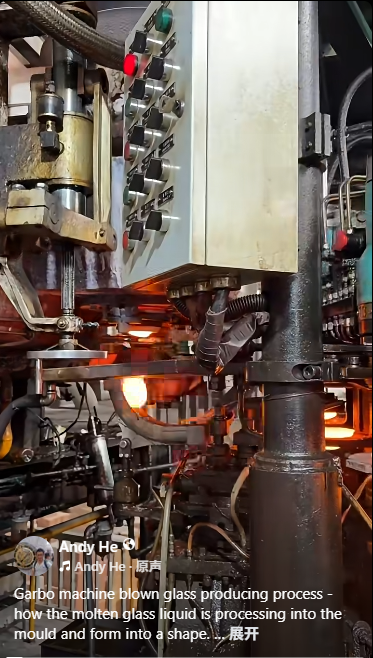
The prepared glass mixture is transported to a fully automated melting furnace. Under a constant high temperature ranging from 1550°C to 1600°C, the materials are fully melted, refined and homogenized to form transparent, bubble-free molten glass. An automatic cutting system then divides the molten glass into glass gobs of identical weight, providing standardized raw materials for the subsequent blowing and forming stage.
III. Automated Machine Blowing and Forming
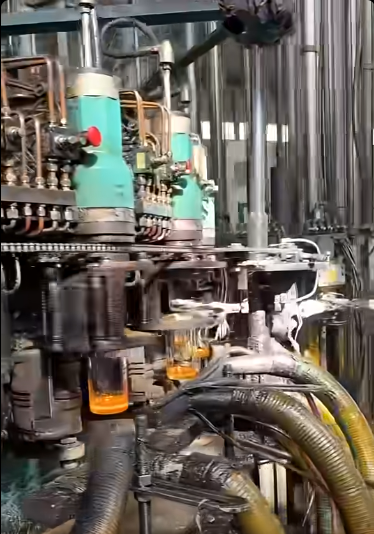
Glass gobs fall into precision molds by gravity. After the molds are fully closed and sealed, compressed air at a stable pressure is injected into the mold cavity. The air pressure inflates and shapes the molten glass in one continuous motion, pressing the glass tightly against the inner mold walls. This process quickly forms complete glass cup structures—including the cup body and base—with even wall thickness and precise overall dimensions.
IV. Demolding and Laser Cold Cutting
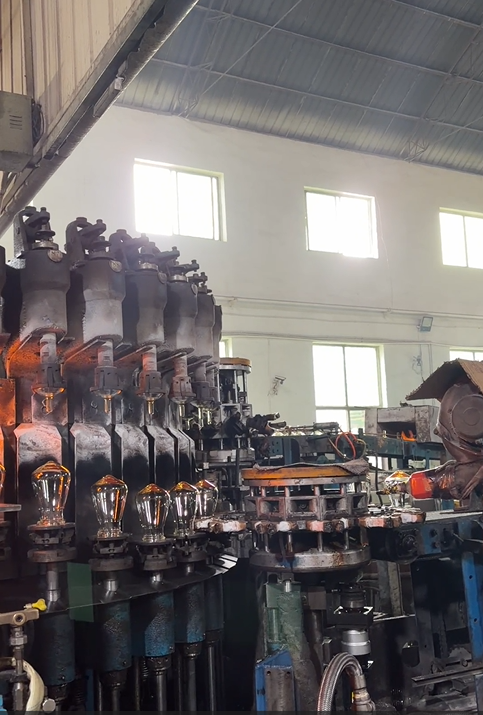
Once forming is complete, the finished glass cups are automatically demolded. At this stage, the cup rim still carries excess glass material and rough, uneven edges. To solve this issue in mass production, we adopt a laser cold-cutting process. Operating at room temperature, this technology precisely trims excess glass waste, leaving perfectly smooth cut surfaces with no chipping, microcracks or thermal deformation. It lays a solid, standardized foundation for subsequent rim finishing procedures.
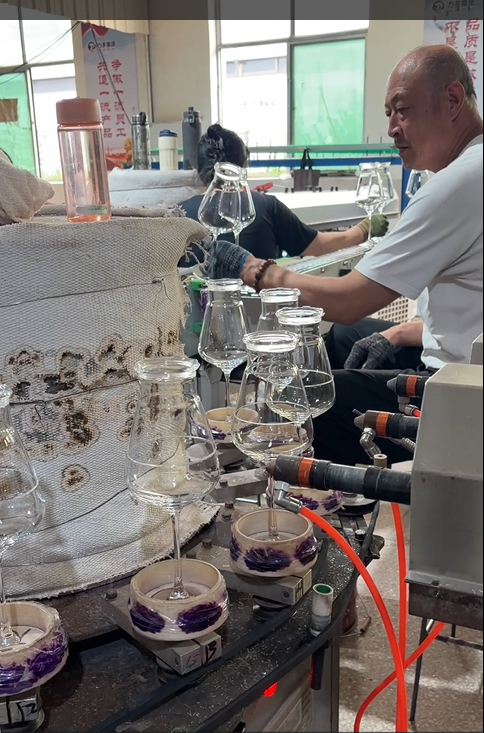
V. Rim Fire-Polishing and Fine Grinding
The laser-trimmed cup rims first undergo flame treatment to release residual internal stress. After stress relief, the rims are processed through multi-stage grinding and polishing, covering coarse grinding, fine grinding and precision buffing. This comprehensive treatment removes all sharp edges and tiny surface scratches, resulting in smooth, rounded, burr-free cup rims that meet safety and aesthetic standards.
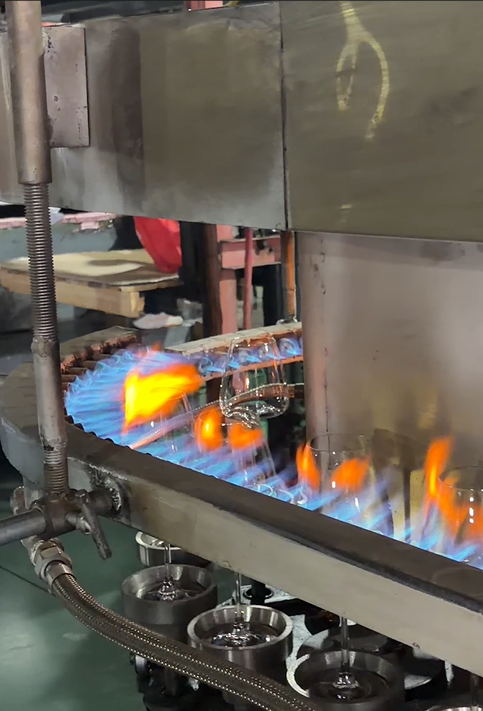
VI. Gradient Annealing for Breakage Prevention
After forming and trimming, glass cups are transferred to an annealing lehr for controlled gradient cooling. The products are steadily cooled from around 500°C at a uniform rate to eliminate internal thermal stress generated during high-temperature processing. This key step effectively prevents spontaneous cracking and breakage during subsequent use, while greatly improving the glass cups’ overall toughness and thermal shock resistance.
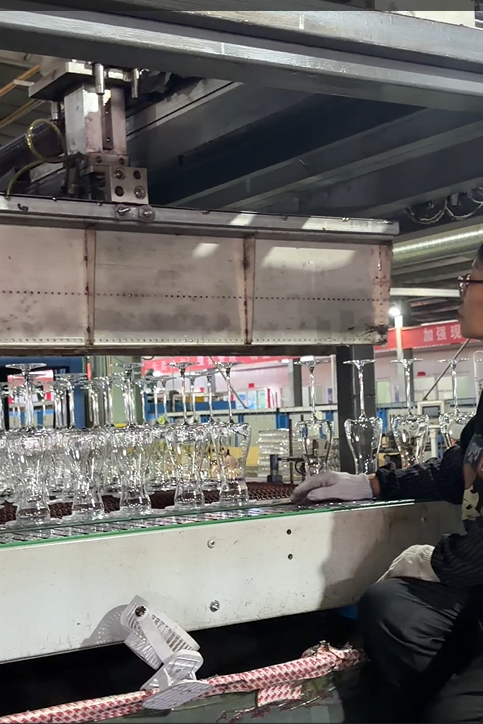
VII. Cooling, Solidification and Surface Treatment
Processed glass cups are slowly cooled to room temperature to achieve full structural solidification. Based on different product design and functional requirements, a series of customized surface treatments can be carried out, such as precision surface grinding, sandblasting, screen printing and decal pasting. For double-walled glass cups, vacuum insulation and sealing procedures are completed at this stage to realize the heat preservation function.
VIII. Two-Stage Quality Inspection and Sorting
We adopt a dual-inspection system combining intelligent machine detection and manual rechecking to screen finished products comprehensively. This two-tier inspection strictly filters out defective products with issues such as air bubbles, cracks, structural deformation, dimensional errors and surface blemishes. Qualified products are graded by quality standards, while unqualified products are recycled and remelted in the furnace to reduce material waste.
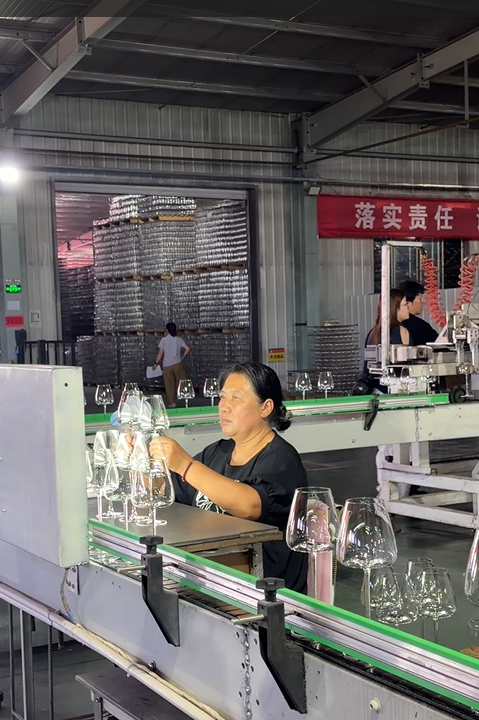
IX. Cleaning, Drying, Packaging and Warehousing
All graded qualified products enter a fully automated post-processing line. They undergo fresh water decontamination, purified water rinsing and hot air drying in sequence, ensuring spotless, stain-free product surfaces. Finally, the glass cups are packaged with shockproof protection, boxed and stored in the warehouse, ready for subsequent delivery and shipment.
Process Advantages Overview
The machine-blown glass manufacturing process relies on full automation and digital numerical control throughout production. Compared with traditional manual glass blowing, it delivers far more stable product consistency, a lower defective rate and much higher production output. It also offers outstanding cost performance, making it the most suitable production solution for standardized, large-scale manufacturing of daily-use glassware. Blown glass production process will still exist some procedure that need some labors take part in, while machine pressed will be much less labors included. So normally if same size and weight items, machine pressed item will be much competitive than machine blown one.


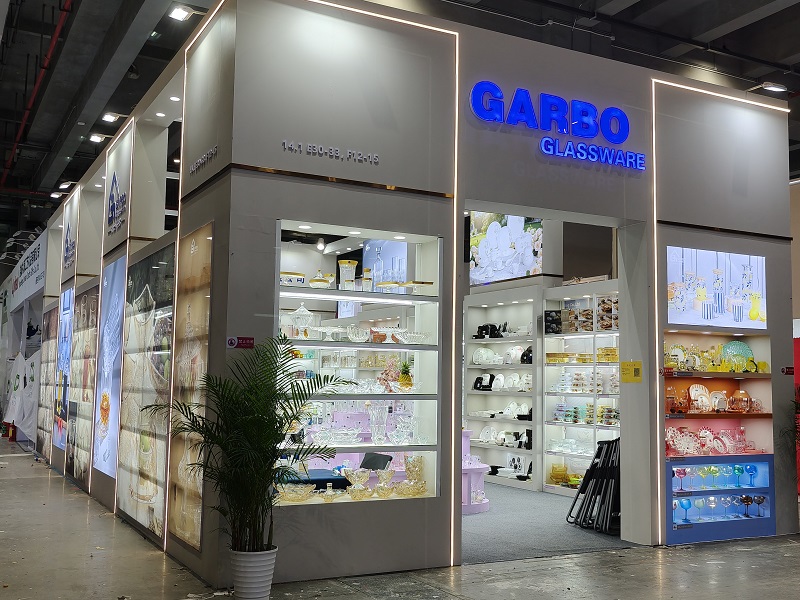
Garbo at 139th Canton Fair: 30+ Years of Glass Heritage + In-House Cutlery Factory
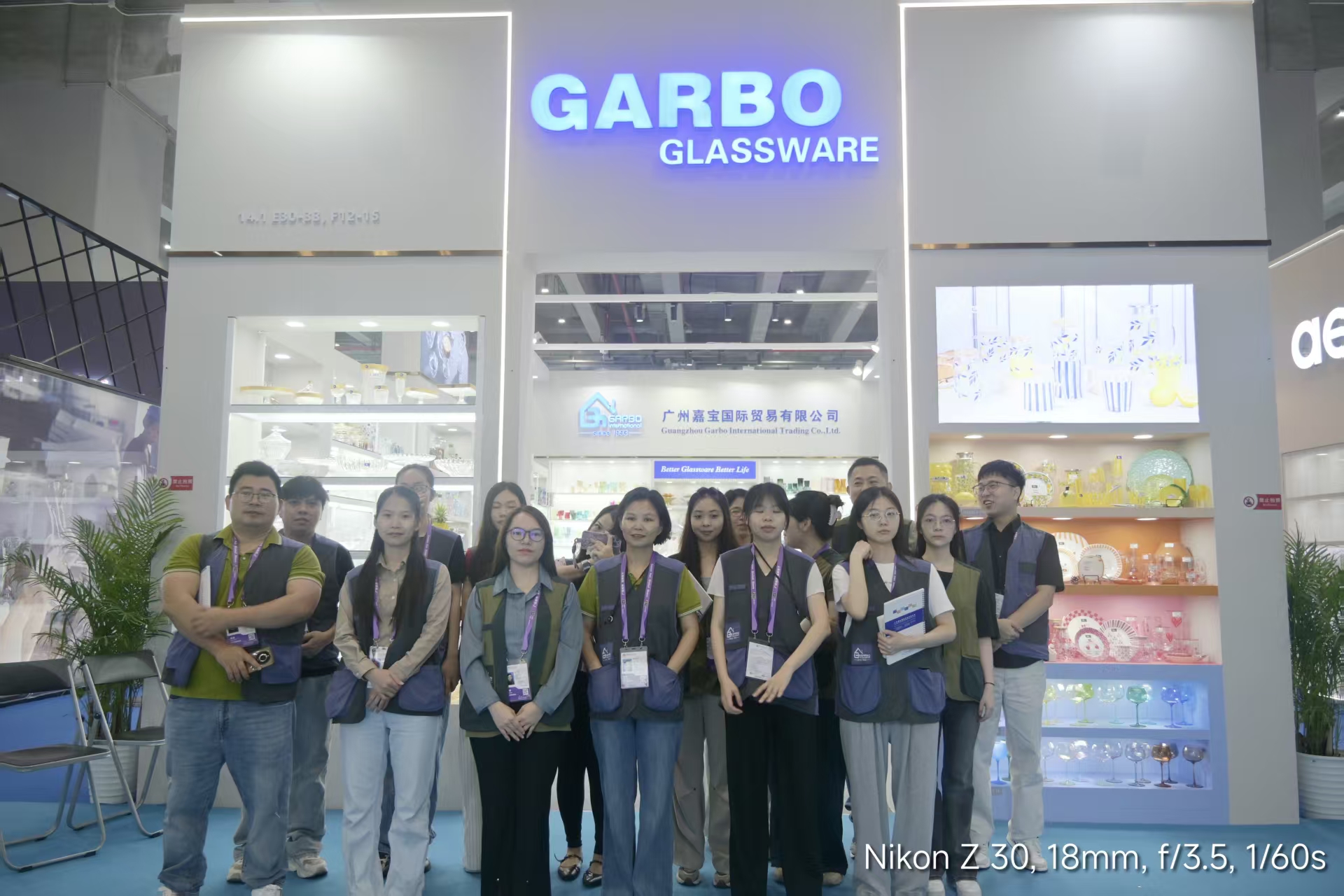
Garbo 139th Canton Fair : Full range of Glassware and kitchenware products, one-stop customizat...

Brilliant Tableware Illuminates Life: Garbo International Shines at the 2026 Shanghai Inter...

Garbo+ Stainless Steel Cutlery and Tableware Impress at the 138th Canton Fair

Garbo International boss leads sales team for global business trip