Language

Pulished on Jun. 04, 2026
Plates almost exist in every family that we cannot live without them in our daily kitchen. But when faced with so many choices in the market, many people will be confused:
Which is better, ceramic plates or glass plates? Today, starting from talking with three modern convenient kitchen appliances - microwave ovens, ovens for baking, and
dishwashers - we will explore whether ceramic plates are better or glass plates are better for our kitchen.
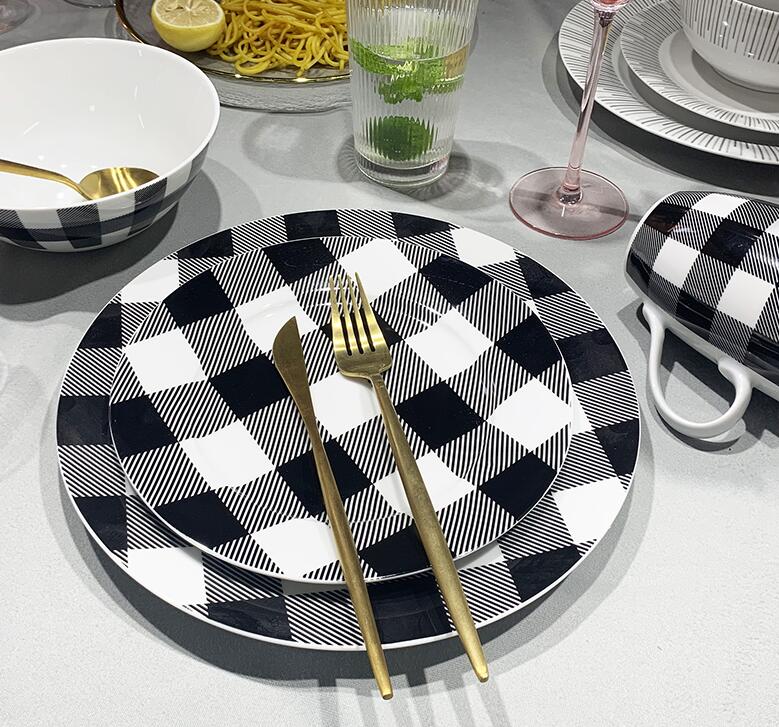
1.Ceramic plates can be perfectly used for heating food in a microwave oven. However, there are special requirements for glass plates if put in microwave heating.
Microwave ovens are almost ubiquitous in every house. But you might not have noticed this: Not all plates can be placed in a microwave oven. The vast majority of ceramic
plates wholesale from China can be safely put in a microwave oven. The ceramic material itself does not absorb microwaves and does not heat up; it merely causes the water
molecules in the food to vibrate and generate heat. As long as the plate does not have metal borders (gold or silver borders), a pure white or underglaze colored ceramic plate
can be safely placed in a microwave oven for heating without any problems. However, glass plates are a bit more complicated. Ordinary sodium calcium glass has limited heat
resistance, and if placed in a microwave oven for a longer time, it is prone to cracking due to uneven heating in certain areas. Only heat-resistant glass labeled as "microwave
oven compatible", also known as borosilicate glass, is relatively safe. Therefore, in comparison, ceramic plates are a good match for microwave ovens, while glass plates require
careful reading of the labels and buying the right one to avoid potential safety hazards.
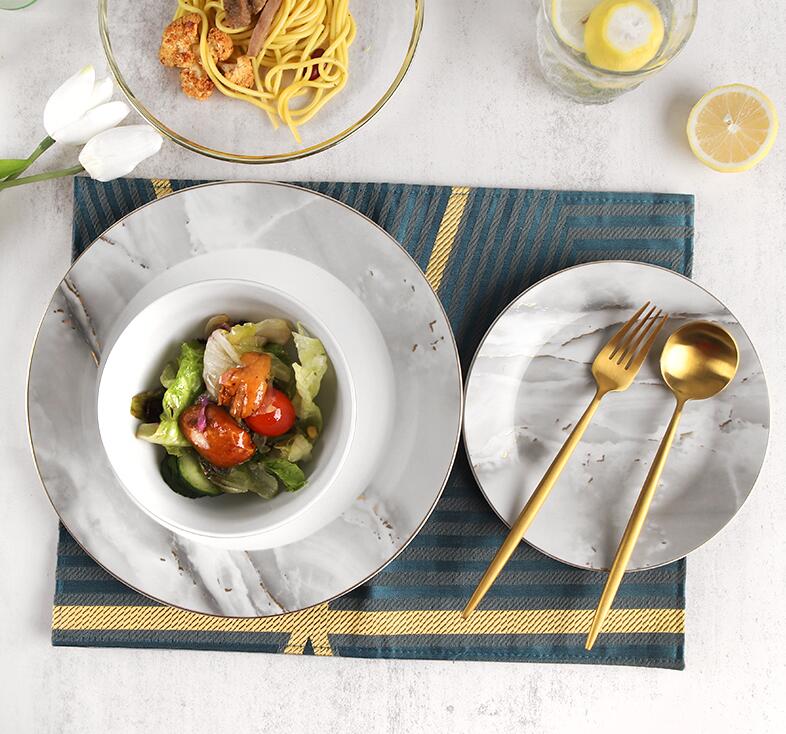
2.Ceramic plates that can withstand high temperatures are suitable for use in ovens, while glass plates have certain risks when placed in ovens.
The temperature of ovens typically ranges from 150 to 250 degrees Celsius, which poses higher requirements for the heat resistance of the plates. High-quality ceramic plates are
fired at temperatures above 1200-1300 degrees Celsius, and the oven temperature is completely within the range that the ceramic plates can tolerate. Whether it's a casserole,
roasted vegetables, or baked desserts, ceramic baking plates can handle them all. Moreover, ceramics have good heat retention properties, and the food can remain warm for a
longer time after being taken out of the oven. In contrast, ordinary glass plates must never be placed in ovens. Even so-called "heat-resistant glass plates" have a clear temperature
limit, usually not exceeding 200 degrees Celsius. Additionally, glass plates cannot be subjected to sudden temperature changes. For example, if a glass baking plate is taken out of
the oven and immediately placed in cold water, it may crack on the spot. Therefore, glass plates have a higher risk of being damaged when placed in ovens, while ceramic plates
are a common material for professional ovenware.
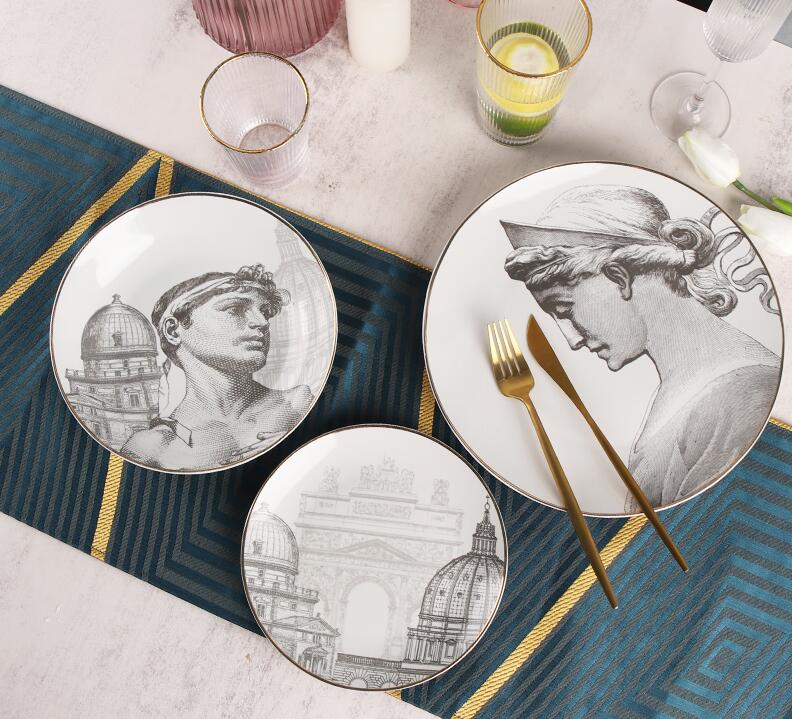
3.When it comes to the step of washing dishes in the dishwasher, ceramics are stress-free, but glass will "turn white".
The dishwasher saves time and effort, but it also poses a considerable challenge to the dishes. The dishes placed in the dishwasher must be able to withstand high-temperature
water washing, strong alkaline detergents, and prolonged rinsing, a combination of the three. Ceramics have stable chemical properties and a hard and dense glaze surface.
High-temperature water washing and alkaline detergents will not cause any damage to them. They come out still shiny and new. Although glass has high hardness, after repeated
washing in the dishwasher, its surface is prone to develop "rainbow patterns" or turn white. This is a slight erosion of the glass surface by alkaline detergents, although it does not
affect usage, the aesthetic appeal will be greatly reduced. Some thin-walled glass plates may also develop small cracks during high-temperature rinsing. In general, ceramic plates are
more durable. If you use the dishwasher to clean dishes in your home for a long time, then the durability of ceramic plates will be higher than that of glass plates.
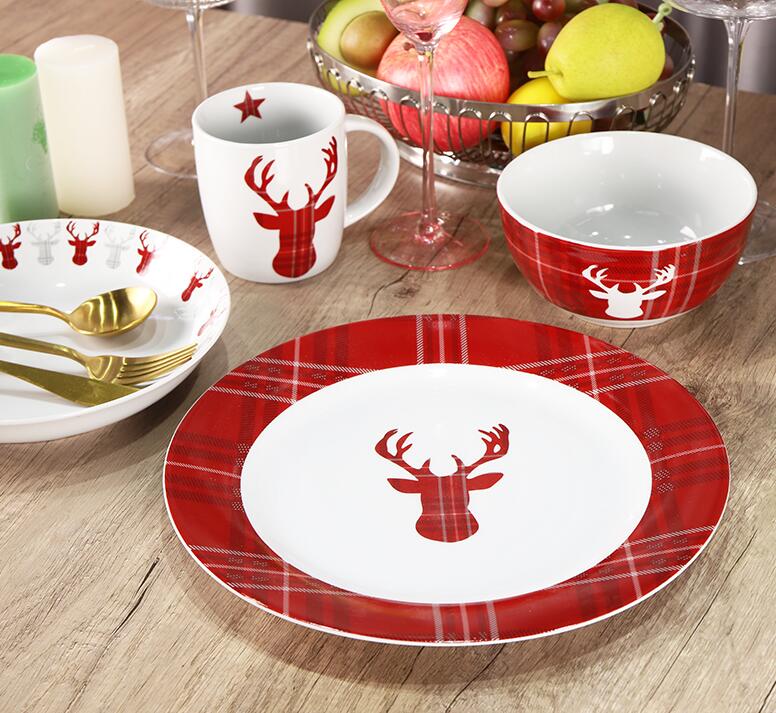
If the plates in your home need to be frequently used in the microwave, oven, and dishwasher, ceramic plates manufactured from Chinese factory are undoubtedly the more versatile option.
They are resistant to high temperatures, chemically stable, and have good heat retention properties, making them capable of withstanding various challenges posed by modern kitchen appliances.
Of course, glass plates also have their uses. Their transparency is suitable for plating, holding cold dishes or desserts, which gives a more refreshing visual effect compared to ceramic plates.
However, when it comes to "versatility", ceramic plates clearly outperform glass plates.


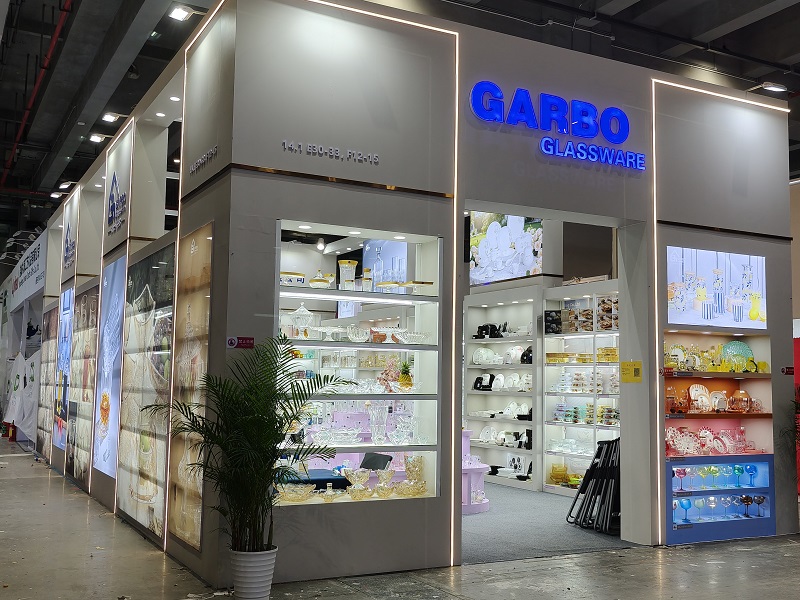
Garbo at 139th Canton Fair: 30+ Years of Glass Heritage + In-House Cutlery Factory

Garbo 139th Canton Fair : Full range of Glassware and kitchenware products, one-stop customizat...

Brilliant Tableware Illuminates Life: Garbo International Shines at the 2026 Shanghai Inter...

Garbo+ Stainless Steel Cutlery and Tableware Impress at the 138th Canton Fair

Garbo International boss leads sales team for global business trip